

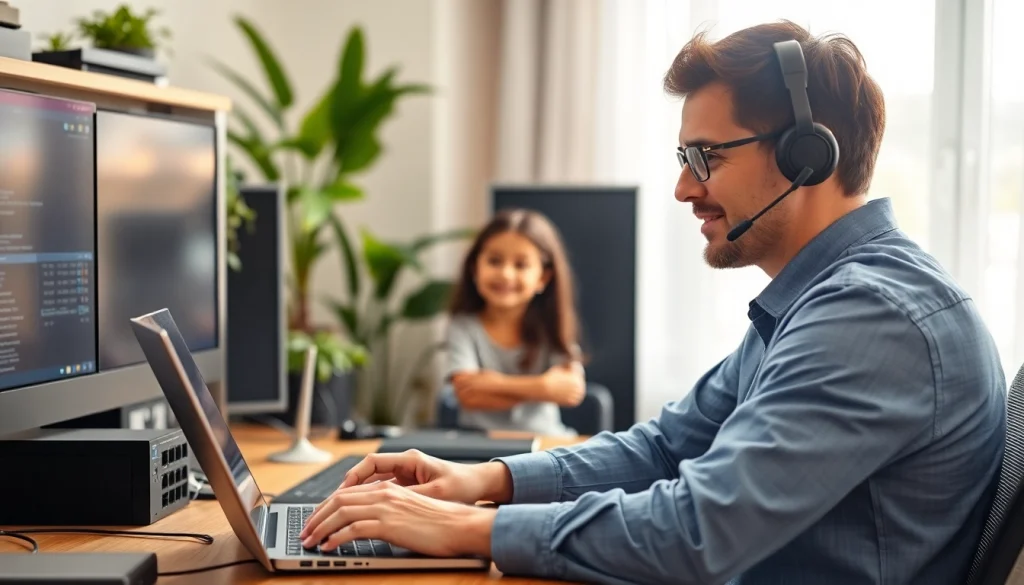
Understanding Residential IT Support
What is Residential IT Support?
Residential IT support refers to a range of technical assistance services provided directly to customers in their homes. This includes support for a variety of technology-related issues that individuals and families face daily. From computer repairs to network setups and troubleshooting, residential IT support encompasses a broad spectrum of services tailored to meet the needs of home users. These services can be delivered on-site or remotely, depending on the nature of the problem and the preference of the customer. As technology continues to evolve, the importance of having dependable IT support at home has never been greater, making it essential for homeowners to understand what these services entail.
Importance of Reliable IT Solutions at Home
In today’s digitally-driven world, technology plays a crucial role in daily life. Whether it’s for work, education, or entertainment, having reliable IT solutions at home has become a necessity. Dependable residential IT support ensures that your devices operate efficiently, allowing you to focus on your tasks without interruptions.
Furthermore, effective IT solutions contribute to the security of personal information and data. Cyber threats are rampant, and having support from experts who understand security protocols can safeguard your home network against potential breaches. By investing in residential IT support, homeowners can enjoy peace of mind, knowing that their technology works properly and their data is protected.
Common Challenges Faced by Home Users
Home users often encounter a variety of technology-related challenges, including:
- Hardware Failures: Devices like computers and printers can unexpectedly fail, leading to frustration and lost productivity.
- Software Issues: Problems with operating systems, applications, or updates can disrupt workflows and cause errors.
- Network Problems: Slow internet speeds, improper configurations, and connectivity issues can hinder online activities and access to resources.
- Cybersecurity Threats: Inadequate security measures leave home networks vulnerable to attacks, risking personal and sensitive data.
- Lack of Technical Knowledge: Many users may not have the necessary skills to troubleshoot problems or set up new devices effectively.
Key Services Offered in Residential IT Support
Computer Troubleshooting and Repair
One of the most common services provided in residential IT support is computer troubleshooting and repair. This includes diagnosing issues such as software glitches, hardware malfunctions, or performance slowdowns. Technicians typically follow a systematic approach, starting with identifying the problem and then executing necessary repairs or upgrades.
For example, if a computer fails to boot, the technician may check for hardware issues such as faulty RAM or a broken hard drive. If the problem is software-based, such as an operating system failure, they can often repair or reinstall the software to restore functionality. Ensuring that your system runs smoothly involves continual maintenance, which many IT support providers include as part of their services.
Network Setup and Optimization
With numerous devices connected to home networks, establishing a reliable and optimized internet connection is vital. Residential IT support can assist with network setup, including configuring routers, securing Wi-Fi networks, and optimizing internet speeds for better performance.
Additionally, tech support can help with integrating devices into the network, such as smart home gadgets, printers, and game consoles. An optimized network setup not only improves connectivity but also enhances the overall user experience and productivity.
Data Backup and Recovery Solutions
Data loss can occur due to various reasons—hardware failure, accidental deletion, or cyber attacks. Most residential IT support services provide data backup and recovery solutions to help safeguard important information. Backups can be automated to occur regularly, minimizing the risk of permanent loss.
In the event of data loss, IT support can assist with recovery efforts, employing specialized tools and techniques to retrieve lost files. Whether through cloud-based solutions or physical backups, implementing a solid data recovery plan is a crucial aspect of residential IT support, ensuring that critical information remains secure.
Choosing the Right Residential IT Support Provider
Factors to Consider
When selecting a residential IT support provider, several factors should be taken into account:
- Expertise: Look for technicians with relevant experience and qualifications in dealing with home technology issues.
- Service Range: Ensure that the provider offers comprehensive services that fit your specific needs, from hardware repairs to cybersecurity solutions.
- Response Time: Timely support can be critical, especially during urgent situations. Choose a provider with a reputation for quick and effective response.
- Pricing: Evaluate the pricing structure to ensure it fits within your budget, while also assessing whether the quality of service justifies the cost.
Regional Availability and Expertise
Choosing a provider with regional expertise can significantly enhance the support experience. Local providers will likely understand the specific technology trends and common issues faced by residents in your area. They can provide tailored solutions and are often better equipped to deliver rapid assistance when required.
Reviews and Testimonials from Clients
Reading customer reviews and testimonials can provide valuable insights into a provider’s reputation and the quality of service. Look for feedback that highlights the effectiveness of their support, customer service experience, and success in resolving issues. This can help in making an informed decision when selecting a residential IT support provider.
Best Practices for Home IT Maintenance
Regular Software Updates and Security Checks
Maintaining a secured and efficient home technology environment begins with regular software updates and security checks. Keeping operating systems and applications up-to-date helps to protect against vulnerabilities that hackers may exploit. By enabling automatic updates, you can ensure your software remains protected without requiring constant monitoring.
Additionally, regular security checks, including running antivirus scans, can help identify potential threats and ensure that your devices are operating safely. Consider using a comprehensive security suite that provides real-time protection against various forms of malware and phishing attacks.
Organizing Digital Files and Backups
Organizing digital files is essential for maintaining productivity and ensuring easy access to important documents. Implementing a systematic file management system, including clear folder structures and naming conventions, can significantly enhance efficiency.
Moreover, regular backups of important files are vital. Using a combination of cloud storage and external drives offers a more resilient backup solution, minimizing the chance of data loss due to unforeseen events.
Training Family Members on Basic IT Issues
Training family members on how to resolve basic IT issues empowers them to handle minor problems without needing professional support. This can include instructions on how to restart a device, troubleshoot internet connection issues, or recognize potential scams.
By fostering a tech-savvy household, you not only alleviate some of your reliance on external support but also enhance the overall technological proficiency within your home.
Future Trends in Residential IT Support
Growth of Remote Support Services
The trend towards remote support services continues to grow, offering unmatched convenience for residential IT assistance. Remote support allows technicians to diagnose and resolve issues without being physically present, significantly reducing response times.
This approach not only provides flexibility in terms of schedules but can also be more cost-effective for both providers and clients. With advancements in remote access software, tech support teams can now effectively manage many home systems and troubleshoot issues efficiently.
Integration of Smart Home Technologies
As smart home devices become increasingly popular, their integration into residential IT support is becoming essential. Homeowners may require support for setting up smart assistants, home security systems, smart lighting, and other devices designed to enhance convenience and safety.
Support services need to adapt to accommodate the complexity brought by diverse smart devices, ensuring that cybersecurity remains a priority while optimizing their performance.
Emerging Security Solutions for Home Networks
With the rise of cyber threats, emerging security solutions are critical in protecting residential networks. IT support providers are now incorporating advanced security layers, including firewalls and intrusion detection systems, specifically designed for home environments.
Educating homeowners about best practices for network security, including secure passwords, multi-factor authentication, and recognizing phishing attempts, is increasingly vital. A proactive security strategy can mitigate risks and enhance the resilience of home networks.
Effective residential IT support encompasses a multitude of services and features that adapt to the unique challenges faced by home users. As technology evolves, so too must our approaches to managing it effectively at home.